
Searching Cases by Name
Pick the court first. Then use the name route. The CourtView entry pages tell the public that Case Search accepts names, but they say nothing about how: whether first and last names are separate fields, whether partial names work, whether wildcards apply, or whether a date range is required. The safest move is simple. Type the name exactly as the court paperwork spells it, then verify any match against the case number before trusting it.
- Decide whether the case belongs in Morgan County Court or the Court of Common Pleas.
- Open the correct official CourtView eServices page and select Case Search.
- Use the advertised name search route and narrow by case type if the live form offers that option.
- Compare a result with the known case number, court, and current docket information before relying on it.
- If the search is unclear, check the other Morgan portal when jurisdiction is uncertain, then contact the responsible clerk.
The table reflects only what the public entry screen itself offers. It is not a promise that hidden search options follow some particular form design.
| Search route | Type | Required | Published note |
|---|---|---|---|
| Names | Text search route | Unspecified | CourtView advertises a name search; the detailed controls did not render for inspection. |
| Case number | Text search route | Unspecified | Use the exact number printed on Morgan court paperwork when possible. |
| Case types | Filter or selector implied | Unspecified | The landing copy says “types” but did not reveal values. |
| Attorney | Text search route | Unspecified | Advertised by CourtView; no formatting rule was published. |
| Ticket or citation | Text search route | Unspecified | Advertised for the County Court route. |
Two Morgan County CourtView Searches
Morgan County splits its online case lookup between two portals, one for each court. The Common Pleas CourtView portal covers General, Domestic Relations, Probate, and Juvenile division cases. The County Court CourtView portal handles county-court criminal, traffic, civil, small-claims, and preliminary felony matters.
A dead end in one portal proves little. The case may sit in the other court entirely. That matters most for a felony that starts with a County Court preliminary hearing and then moves forward in Common Pleas. It leaves entries in both places.
Searching by Case Number
Searching by case number is the most precise route CourtView offers. Morgan County publishes no visual case-number pattern. It posts no list of case-type codes, and no sample docket to copy from. Guessing a year, a letter, or a sequence segment will only produce false misses. Type the exact Morgan case number from court paperwork into the portal for the court named on that paperwork.
County Court rules state that criminal actions are numbered under the Ohio Superintendence rules. Filings and calls about a case all use that number. If the number you hold is incomplete, the safer move is asking the responsible clerk which court keeps the record. Don't rely on searching only the court name you happen to know.
Morgan County Citation Case Search
For Morgan County Court traffic matters, CourtView lists ticket or citation number as an express Case Search route. Read the court name printed on the citation before anything else. McConnelsville Mayor’s Court and the clerk context around Malta Mayor’s Court are covered separately, and neither one appears as part of a single county CourtView docket.
A citation naming County Court belongs in County Court CourtView, or with the County Court Clerk. A citation naming a village court should go to that named court or its own village channel. Do not assume it will surface in a County Court result, because it will not.
Morgan County Felony Search Route
Morgan County splits felony work between two courts. County Court handles the preliminary hearings. The Court of Common Pleas, General Division, holds felony jurisdiction. So one felony can leave a trail in a lower court docket before the Common Pleas case moves ahead. Check the court named on your current notice, then run that court through the CourtView portal.
The split matters when you search. A felony case's stage tells you which docket to check, not just what it is about. Don't assume every felony carries the same event labels. And don't count on a case staying visible in both systems forever.
What a Case Search Returns
A search returns docket information. That is the court's chronological record of activity in a case. Expect the court name, the case, and the current entries. The official landing pages don't guarantee one universal Morgan result-row layout. They say nothing firm about document images, financial fields, sort order, or how often data refreshes. Use what you find to identify the court, the case, and what has happened so far. When you need an official copy, confirm it with the record keeper.
| Case number | The case identifier used to connect filings and court events; use the number from official paperwork. |
|---|---|
| Docket activity | A chronological record of filings, orders, hearings, and events in one case. |
| Setting | A scheduled event that may require confirmation from a later order or court staff. |
| Journal entry | A written court entry recording an order, judgment, or other action. |
| Document or image | Availability was not verified from the public entry screen and cannot be presumed. |
Morgan County Case Search Limits
Locally, CourtView is known as software for docket information. Nobody describes it as a complete certified repository. Need a certified Common Pleas record? Contact the Morgan County Clerk of Courts. For a County Court record, go to the County Court Clerk. The Morgan County court records page walks through these separate paths and record types.
County Court rules offer a fallback for cases filed after January 1, 2006. Electronic text and digital images are retained. The clerk supplies hardware and software so the public can review and copy electronic records on site. The rule doesn't promise remote access to every image, and confidentiality limits still apply.
Morgan County Civil Case Routing
The civil amount often tells you which portal to use. Ohio county-court law gives Morgan County Court civil jurisdiction up to $15,000. The Common Pleas General Division, meanwhile, claims original civil jurisdiction above $500. It also holds exclusive jurisdiction above $15,000. Those ranges overlap. So treat the dollar figure as a clue rather than a legal analysis.
Small claims and limited civil matters usually belong in County Court. Bigger General Division cases point to Common Pleas. A counterclaim over $15,000 can force certification to Common Pleas. Once a case is filed, though, the court and case number printed on the paperwork are still your best anchors for any docket search.
Statewide vs County Case Search
Ohio has no single public trial-court docket database that covers every county at once. Morgan County splits its docket search between two court-specific portals. So start with whichever court actually holds the case. That tool is CourtView. The Supreme Court's eStats service is a different animal. It reports aggregate court statistics, not a case lookup. No individual party or case number appears there.
| Official resource | Coverage | Best use |
|---|---|---|
| Morgan Common Pleas CourtView | Common Pleas divisions | Locate docket information for General, Domestic Relations, Probate, or public Juvenile material. |
| Morgan County Court CourtView | County Court matters | Locate docket information for traffic, misdemeanors, small claims, limited civil cases, and preliminary felony proceedings. |
| Ohio eStats Public Reports | Aggregate court reports | Review period-based court statistics, not a person or case search. |
Morgan County Aggregate Court Data
Curious about caseload trends rather than one docket? The Ohio eStats Public Reports interface lets you pick a court, jurisdiction, judge, and report type, plus a start and end month or quarter. It delivers aggregate context. It will not pull up a particular case.
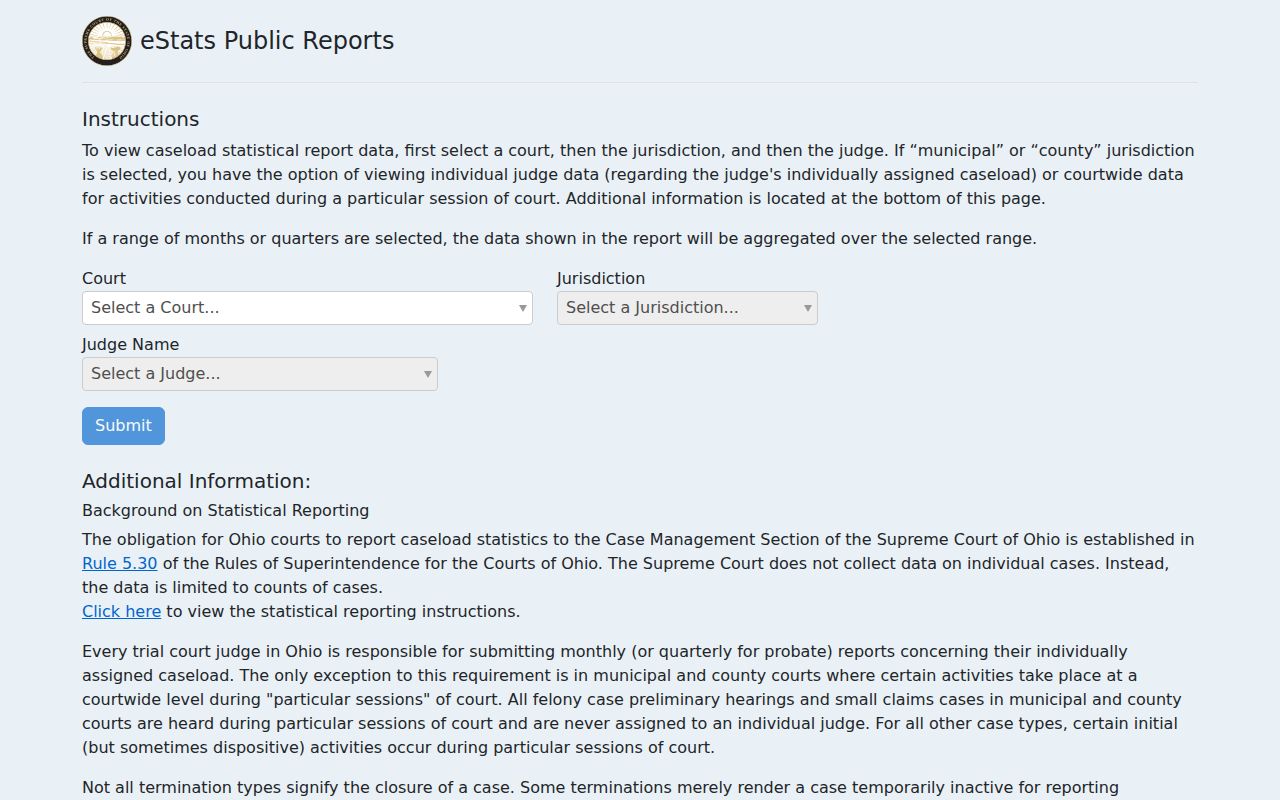
The selections on that screen are all about court reporting. Nothing there searches by party, citation, or case number. That is exactly why eStats sits apart from CourtView, and the Supreme Court itself warns that reporting data can be incomplete or revised after a reporting period closes.
Morgan County Federal Case Search
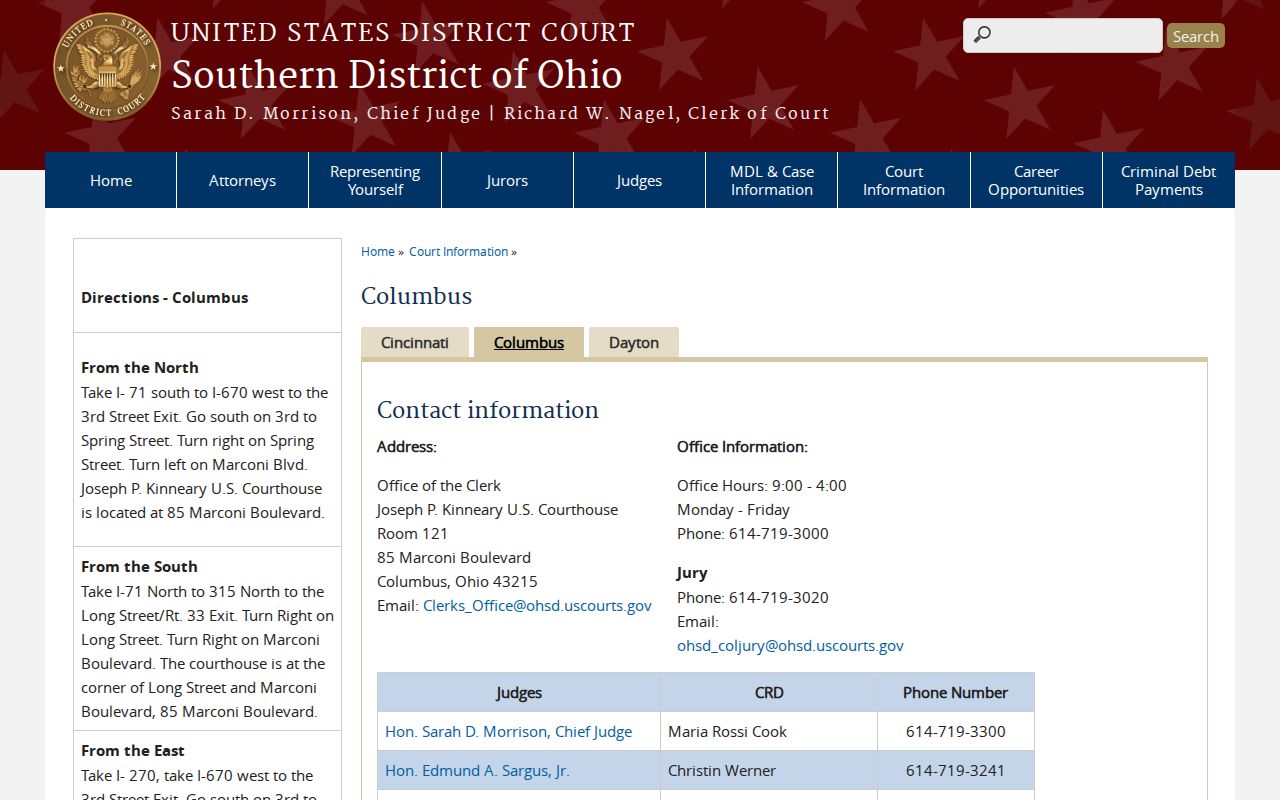
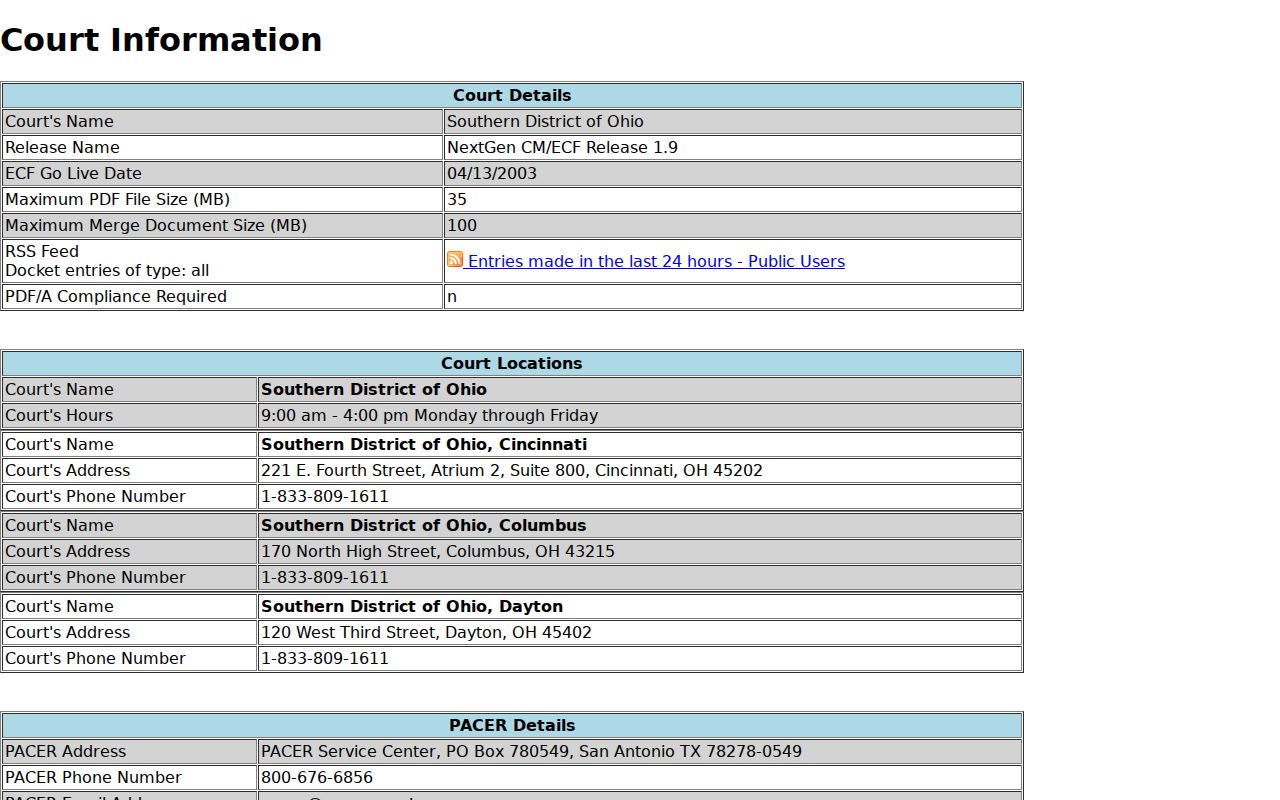
Federal cases never run through Morgan CourtView. Morgan County sits in the Eastern Division. Its parent court is the U.S. District Court for the Southern District of Ohio. That division's federal civil and criminal business routes through Columbus. Federal dockets live on PACER and the CM/ECF system instead. The Southern District CM/ECF court-information page names the public court information system. It also lists the Columbus location.
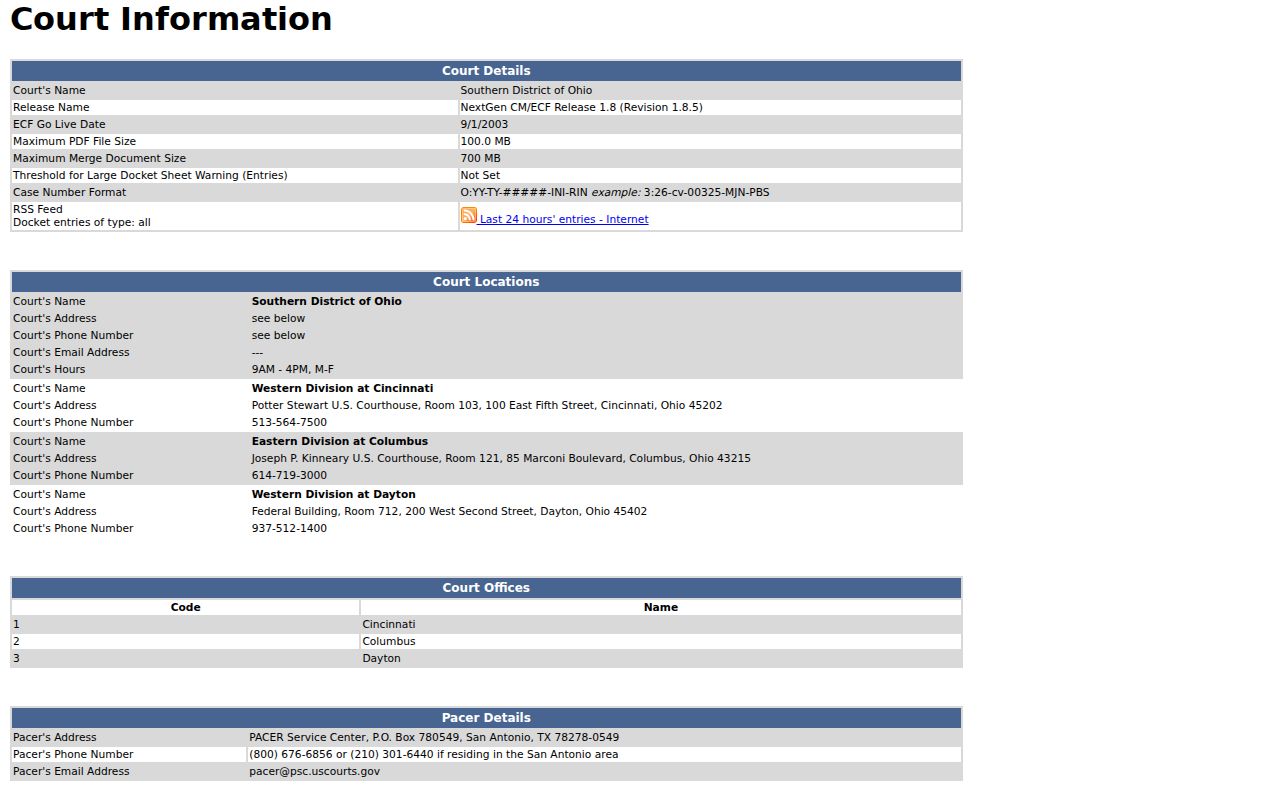
Even when a party name or the subject matter sounds familiar, this federal route has nothing to do with a Morgan County state-court case. They are separate systems. For the place itself, the Southern District Columbus courthouse page gives the federal courthouse context for the Eastern Division.
Treat federal search access as its own system. It is not a fallback tab tucked inside Morgan CourtView. Fees apply, and the official PACER pricing page spells out the docket and document access charges along with the quarterly waiver threshold.
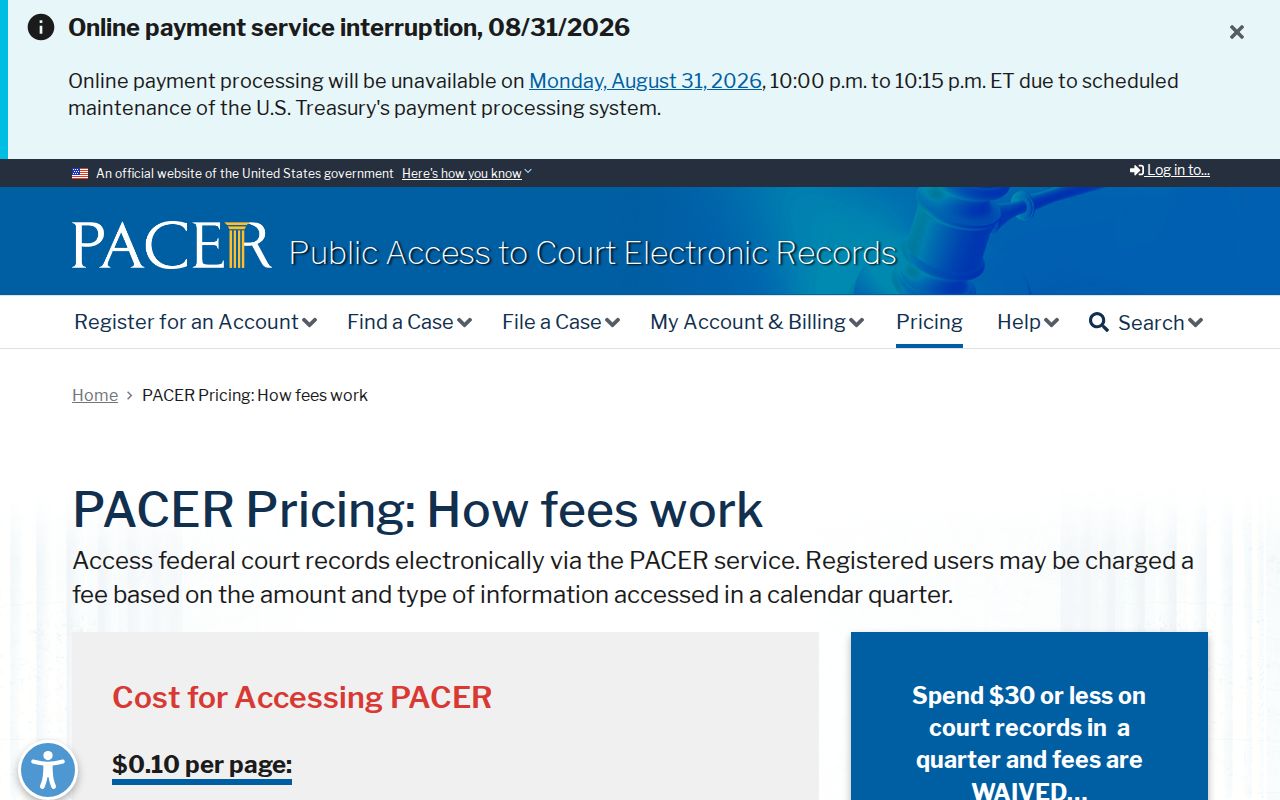
PACER is the official source for federal docket access. Its charges and account rules never touch Morgan CourtView. Bankruptcy runs on its own federal track too, and the Southern District of Ohio Bankruptcy CM/ECF page backs that up with a separate court-information route.
Bankruptcy records are not Morgan Common Pleas Probate records. Do not ask the Probate Clerk for them. On the appellate side, the Sixth Circuit Court of Appeals handles federal appeals, while state appeals from Morgan County go to Ohio's Fifth District.
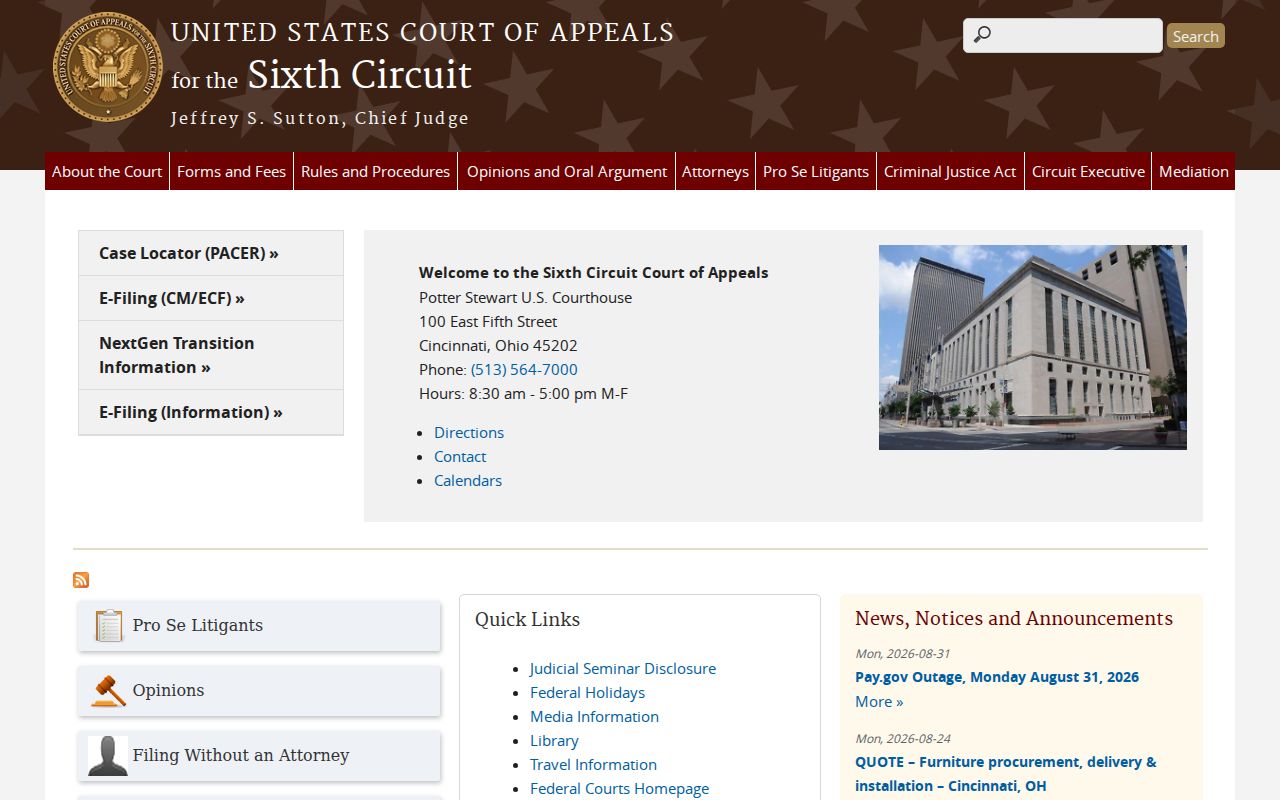
That split preserves the distinction between federal appeals and state appellate docketing.
Morgan County No-Result Checks
When an official docket search comes back empty, slow down before assuming anything. First confirm you picked the right court. Check that you typed the exact case number. Also consider whether the matter might be a traffic citation, a preliminary felony proceeding, or a civil case sitting in the other Morgan court. Then call the clerk with whatever case details you have. This is troubleshooting, not a verdict on the case itself.
Older files can hide from a public result. So can sealed or expunged matters, juvenile confidentiality, and limits on remote access. The right move is a records request to the correct docket keeper. An empty search screen tells you nothing about why.
Access and Restricted Cases
Ohio court records are public as a general rule. But the current Rules of Superintendence permit redaction, limits on direct or remote access, time-limited restrictions, generic docket descriptions, and initials where needed. Morgan's Juvenile Division routes through separate staff. Juvenile material should never be assumed to be searchable from home.
Matters that qualify as conviction, bail-forfeiture, dismissed, no-bill, not-guilty, or pardoned can fall under statutory sealing or expungement rules. A missing result might trace to the wrong court selection. It could also be a restriction, sealing, an older record, or a thin online history. That silence does not tell you why the record is absent. Ask the responsible clerk about the right public access route for the file.