
How to Search Civil Dockets
Ohio has no single trial-court search that covers Morgan County. The county runs two separate CourtView routes instead. County Court civil and small-claims cases sit in Morgan County Court CourtView. General Division civil matters sit in a separate Common Pleas CourtView route. The other Common Pleas divisions live there too. CourtView describes its Case Search as working several ways. Case number, type, name, attorney, and ticket or citation number all work. The public entry pages leave much unstated. Filters, result fields, and document images behind them get no explanation.
Pull the case papers first. The court name, division, and exact case number are all there. Morgan has published no verified local civil-number pattern, so guessing a format gets you nowhere. A search can come up empty. You may also want a paper copy. Then contact the clerk for the court that holds the civil case. The clerk's office posts no universal public request form. It posts no flat plain-copy price, mail checklist, or stated turnaround time for Morgan County civil docket requests.
- Identify the court and division from the notice, complaint, order, or case number.
- Open the matching official Morgan CourtView portal and use the disclosed Case Search route.
- Search with the exact case number when available, or use the name, attorney, or type route that fits the court record.
- Read dated entries in order and confirm a close setting with the latest order or court staff.
- Request an official or certified copy from the responsible clerk, not from a portal display.
Morgan County Civil CourtView Routes
Think of CourtView as Morgan's docket-information layer. The Common Pleas technology plan names the product CourtView 3. The software is also called Equivant Case Management, and the plan credits it for docket information. County Court runs its own public eServices route. The two-portal split matters more than it sounds. A no-result in one court says nothing about the other court. It may still hold the civil case. So a Morgan County civil docket search may need both routes.
The landing pages also advertise calendar viewing, Quick Pay, Advanced Payments, and eFile or File Documents. None of that guarantees every Morgan civil division takes every filing electronically. The technology plan listed Probate e-filing implementation as planned for late 2024. The public entry screen says filing requires login. Before relying on an eFile option, confirm eligibility, rules, and confirmation procedures for the specific division. One last distinction matters here. CourtView identifies docket information. The clerk remains the source for a certified court record.
Morgan County Civil EFile Route
The Morgan CourtView portal lists eFile or File Documents among its functions. The entry screen notes that filing requires login. The Common Pleas technology plan names CourtView 3 or Equivant as the docket-information system. It lists Probate e-filing implementation as planned for late 2024. A portal option exists, in other words. That is not a promise. It does not guarantee that every civil filing can go in electronically.
Check before you file. Confirm the court, the division, document eligibility, format, fee, and confirmation procedure. The landing pages disclose none of that. Document-size limits, accepted file types, browser requirements, payment-card terms, and a universal eFile rule all go unlisted.
What a Civil Docket Shows
A civil docket is a dated register of case activity. Morgan County's local rules set the range. Entries can run from filing through service, pleadings, settings, motions, journal entries, judgments, and post-judgment work. A CourtView result has gaps. It may not show every party role, service image, monetary amount, document download, or case-type field. So read the dated entry along with the court that issued it. That context beats a bare title every time.
| Case number | The identifier used to locate the civil file. Morgan’s public number format was not verified, so use the exact number printed on court papers. |
|---|---|
| Complaint or filing | The start of many civil proceedings and the first point in the court’s chronology. |
| Service | Formal delivery of court papers. A service entry does not decide the claim. |
| Motion or setting | A request for court action or a scheduled event, which may be a status, hearing, or trial-related setting. |
| Journal entry or judgment | A dated record of an order, ruling, disposition, or other court action. |
Morgan County Civil Docket Timeline
Morgan County Court local rules give a local way to read certain civil docket events. Service must be obtained after filing. Fail to complete it within six months. The clerk then gives notice that dismissal follows in ten days unless good cause appears. Once service is complete, the clerk gives notice of default. If no default-judgment application arrives within 15 days, dismissal for want of prosecution can follow. These are procedural triggers, not a forecast for every civil case.
Settlements move on their own track. A settlement entry should be submitted within 30 days. The rules say the court can otherwise dismiss for want of prosecution. Special proceedings run on statutory time limits. No statutory period may apply. Then the matter should be set within a reasonable time, not more than 90 days. Keep the limits of a docket entry in mind. A service, default-notice, settlement, or dismissal entry describes the case's process, not necessarily the merits of the claim.
- Service not obtained
- Notice that the other party has not been successfully served within the rule’s time frame.
- Default notice
- A clerk notice that follows completed service where a default-judgment application may be considered.
- Settlement entry
- The written entry parties submit after settlement, distinct from a discussion or negotiation.
- Dismissed for want of prosecution
- A procedural dismissal for failure to move the case forward, not a finding on the underlying claim.
Morgan County Civil Setting Contact
A CourtView calendar can help you locate a Morgan County civil setting. The current order or entry is still the stronger confirmation source. The eServices pages advertise calendar viewing and, where permitted, booking. They publish no verified daily-calendar coverage. Courtroom labels, complete filters, and export options also go unlisted. So does any rule making an online display controlling over a later court order.
When a hearing date is close, contact the court or clerk that issued the setting. Common Pleas technology materials say Zoom may be used case-by-case. It covers dissolutions and pretrial or status conferences. Telephone pretrial directions come from staff or the order.
Types of Civil Cases on the Docket
Not every civil matter in Morgan County lands in the same courtroom. County Court takes small claims and other civil disputes at or below the statutory threshold. It is a practical first stop for smaller cases. Anything bigger usually belongs to the Common Pleas General Division. That division also handles larger civil actions and posts a foreclosure deposit. Domestic Relations, Probate, and Juvenile sit apart as separate Common Pleas contexts. Each has its own subject matter. Each has its own access limits. The amount in dispute is a helpful first clue, but it cannot guarantee the filing court or replace legal advice.
| Matter | Likely Morgan docket path | Important boundary |
|---|---|---|
| Small claim or lower-dollar civil matter | County Court CourtView, then the County Court Clerk. | An official Morgan small-claims form, fee, and complete limit explanation were not located. |
| Civil claim at or below $15,000 | County Court may have jurisdiction. | A counterclaim above $15,000 must be certified to Common Pleas under county-court law. |
| Larger General Division civil action or foreclosure | Common Pleas CourtView, then the Clerk of Courts. | The dated General Division deposit list is not a current cost quote. |
| Domestic, probate, or juvenile matter | The appropriate Common Pleas division and staff. | Private information or statutory restrictions can limit remote access. |
Morgan County Civil Jurisdiction Split
Ohio’s county-court statute sets the money lines for Morgan County civil cases. County Court hears civil claims up to $15,000. Claims under $500 belong to it alone. Common Pleas General Division tells its own story. It holds original jurisdiction above $500. Its jurisdiction is exclusive above $15,000. So the two courts overlap in the middle band, which means a dollar figure only starts your search for the right civil docket. It does not finish it.
The route can shift for other reasons. A foreclosure, a statutory remedy, or a counterclaim over $15,000 may change which court takes the case. The name of the court on the filing is what drives your choice of portal and clerk. For Morgan County court records, the County Court and Common Pleas offices remain the dependable local stops.
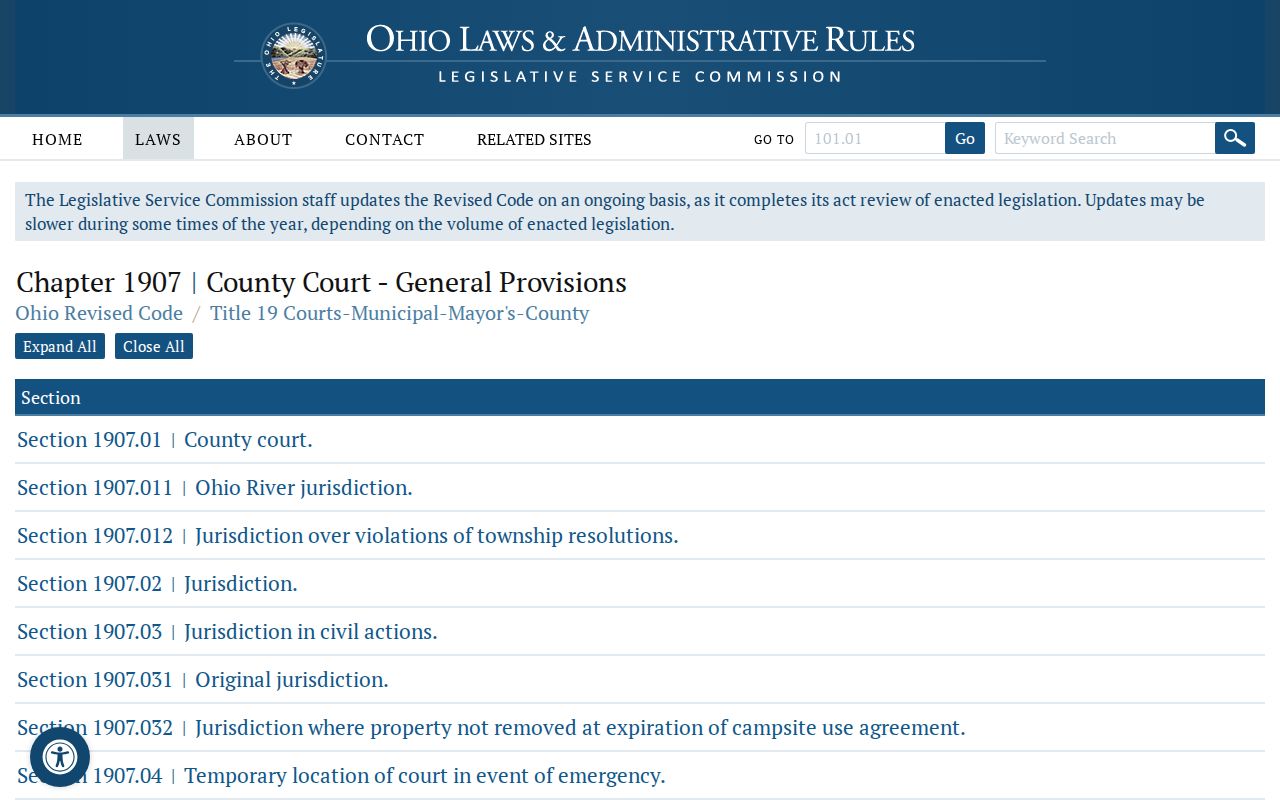
The county-court chapter itself spells out the statutory civil threshold and the County Court’s role.
This is why a Morgan County civil docket search works best court by court. One countywide result will not capture the split.
Settings and Hearings on Civil Dockets
A setting on a Morgan County civil docket is a scheduled event, nothing more. It is not automatically a trial date. The local rules cover service, default, settlement, and special proceedings. A later date may deal with a procedural step. It may not be a final hearing. CourtView advertises a View Calendar feature for schedules and, where permitted, booking. It publishes no verified calendar filters, no courtroom labels, and no export behavior. Nor does it promise that a calendar entry beats a later order. Treat CourtView as a way to locate a schedule. Then read the most recent court entry or order for anything binding. When a date is close, or two sources conflict, court staff confirm. Technology materials from Common Pleas say Zoom may be used case by case for dissolutions and for pretrial or status conferences. Links and instructions are sent by email. Telephone pretrial appearances are also implemented in courtrooms. Get directions from staff or the setting order.
Morgan County Domestic and Probate Dockets
A case that looks civil does not always belong in General Division. That is so in Morgan County. Divorce, dissolution, legal separation, and parental-rights matters live in their own court context. Those files carry public access rules and personal information. Never assume a remote result will appear. When the division is unclear, contact the court or staff before searching further. Domestic Relations is the Morgan division that should guide that civil docket search.
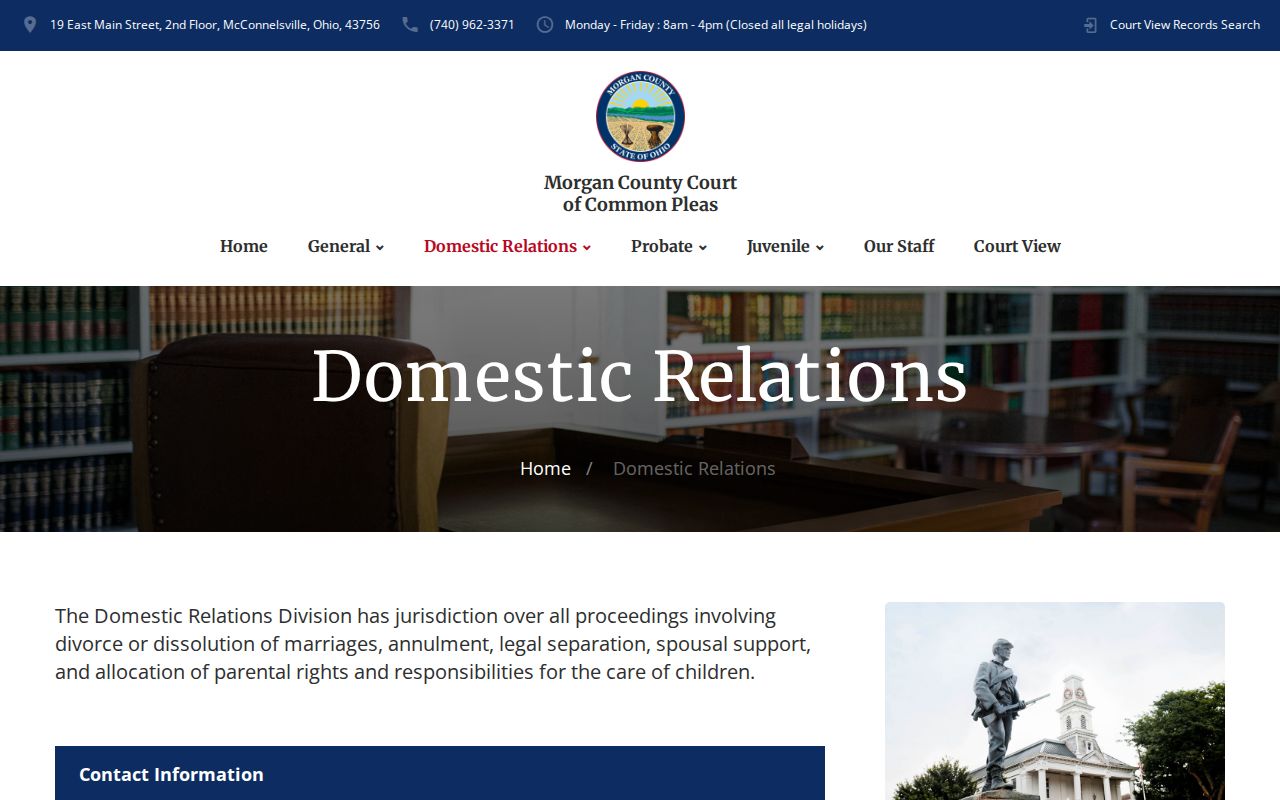
Domestic Relations is its own Common Pleas docket context. It is not a County Court civil search category. Morgan County Probate keeps a separate list of matters. That list covers estates, guardianships, wills, marriage licenses, adoptions, name changes, and related issues. Access can be restricted, especially for adoptions and guardianships, so request a particular public record through the Probate Clerk or court staff.
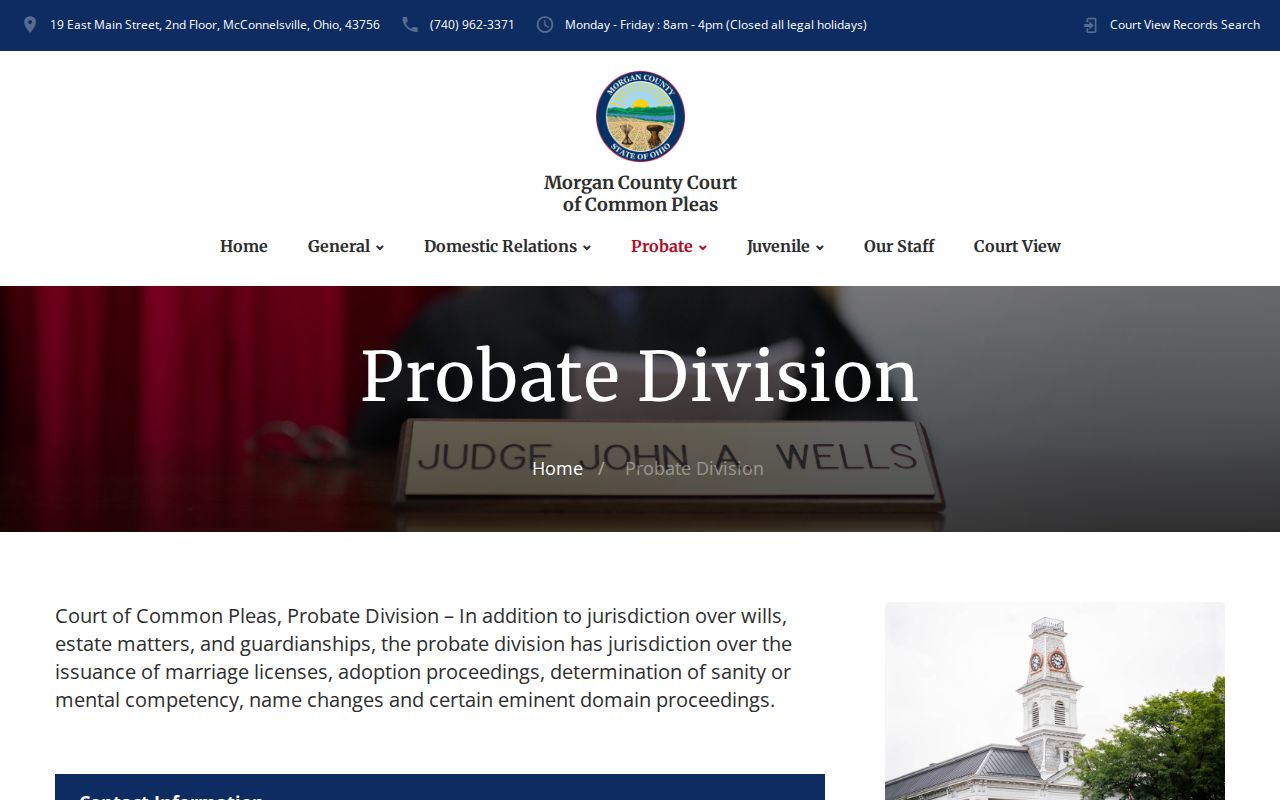
The Probate source routes estates and guardianships to their own division. They are not ordinary civil CourtView results. The Probate fee schedule covers that division alone, so it sets no general civil docket-copy price.
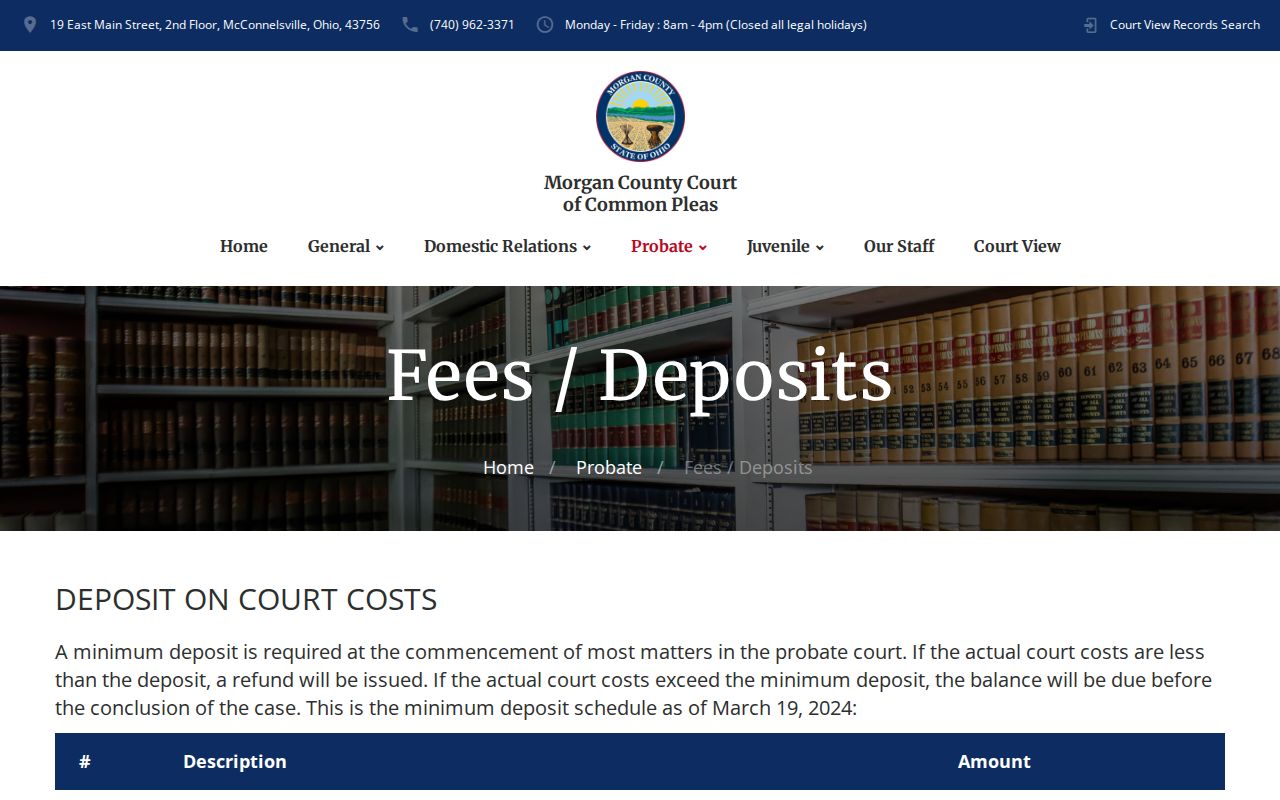
Deposits turn on the division and the matter, not on the word civil.
Morgan County Civil Record Review
County Court's local rules preserve an in-person path. It covers public records filed after January 1, 2006. Under the rule, the clerk retains electronic text and digital images. The clerk also provides hardware or software. The public can review and copy records with it. Keep in mind the option belongs to that specific County Court record. It promises nothing about remote documents or unrestricted access. For Common Pleas civil material, go to the right clerk or division. A docket, a journal entry, an ordinary copy, a certified copy, audio, and a transcript are different requests. They are not interchangeable. The responsible office can confirm what public access is available.
Public Access to Civil Dockets
Ohio court records are generally public. Access can still shrink. Redaction, remote-viewing limits, temporary restriction, initials, or a bare-bones docket description can all narrow what you see. The Rules of Superintendence govern court-record access alongside Ohio's Public Records Act. A public CourtView result is not the whole physical file. That is especially true for juvenile, sealed, confidential, or restricted material. Morgan County Court adds an in-person path for electronic records from after January 1, 2006. The clerk keeps the text and digital images. The clerk supplies review and copying hardware. The rule promises no online images. It promises no plain-copy fee either. It also cannot guarantee that a given document is public. Ask the County Court Clerk at 37 East Main. Or ask the applicable Common Pleas clerk at 19 East Main. Either can explain how to inspect or request the record you need.
Morgan County Civil Fee Dates
The Morgan County court docket starts with a filing fee. The General Division fee and deposit schedule shows what those deposits cost. It carries an effective date of January 1, 2014. A civil complaint naming one to five defendants runs $180. Foreclosure costs $330. Filing an answer, counterclaim, or cross-claim adds $120, a jury demand costs $400, and a certified copy is $1. Treat these figures as deposit lines for filing. They are not a firm quote for every civil case or records request.
| Published General Division line | Amount shown | Source limit |
|---|---|---|
| Civil complaint, one to five defendants | $180 | Schedule marked effective January 1, 2014. |
| Foreclosure | $330 | Confirm current total before filing. |
| Answer, counterclaim, or cross-claim | $120 | Does not state County Court civil cost. |
| Certified copy | $1 | Confirm eligibility, payment, delivery, and current amount with the clerk. |
The fee page on the Morgan County courts site lists each dated civil deposit line, from the complaint to the certified copy, with its posted amount.
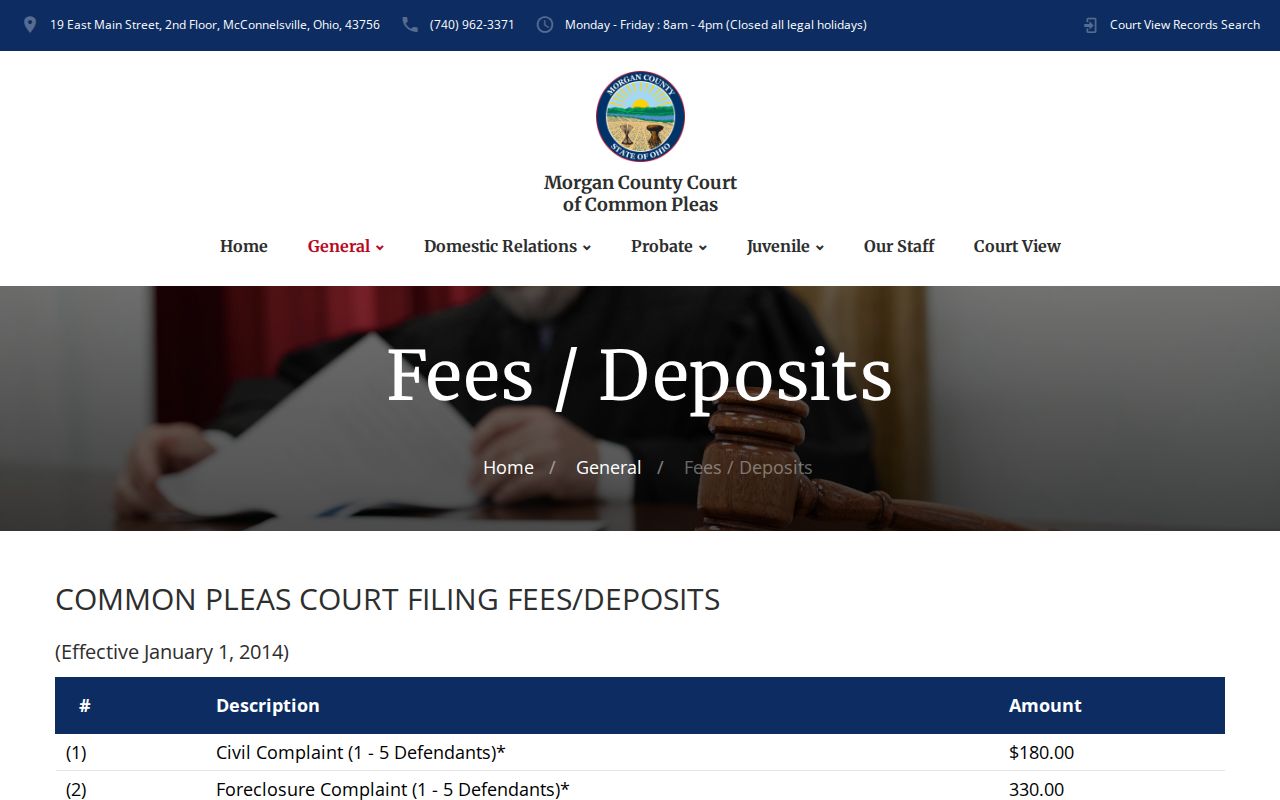
Check with the clerk before you file. The schedule is a deposit sheet, not a promise on today's costs, payment methods, electronic delivery, or turnaround time for copies.