
How to Get Court Records
Figure out which court holds the record before you request anything. For docket information, CourtView is the online route. Common Pleas, Probate, Juvenile, and County Court records then follow whichever clerk or division keeps the file. The Morgan County offices offer no online records-request form, no certified-copy order form, no public-records email channel, no mail checklist, and no stated turnaround time. Confirm the process with the responsible office before mailing or emailing a request. Never assume electronic submission works.
- Identify the court and division, then gather the case number, party name, approximate filing year, and document date if known.
- Use the correct CourtView portal for docket information, if the record is publicly available online.
- Call the clerk or court staff to ask about inspection, copying, the current cost, payment, delivery, and any restriction.
- Visit the appropriate clerk counter when the office directs an in-person request or electronic public-record review.
- Specify whether the request is for a docket, ordinary copy, certified copy, journal entry, or transcript information.
Ohio has no single statewide trial-court docket database that covers Morgan County in place of its local portals. Three access routes exist. You can search CourtView online through either of its two entry points, call the right clerk or division, or review and copy records in person where public access is allowed.
Morgan County Court Records Custodians
Who holds a Morgan County court record depends on the division. Carma Johnson, the elected Morgan County Clerk of Courts, keeps the Common Pleas General Division files at the courthouse. Probate and Juvenile go through their own staff instead, including the Deputy Probate Clerk. Kelly Williams serves as Clerk of Court for Morgan County Court. That court also runs its own CourtView portal.
Match your request to the right office. A felony file or a General Division civil case belongs with the Common Pleas clerk. County Court is where traffic, misdemeanor, small-claims, and limited civil matters begin. Probate and Juvenile dockets should go straight to the staff for those divisions.
Types of Court Records
In a Morgan County case, a court record can mean several things. The docket is the dated log of activity in the case. A case file may also hold pleadings and journal entries. Audio recordings and prepared transcripts are separate materials. They often have different custodians and different request steps.
- Docket or register of actions, which tracks filings, orders, hearings, and other case events.
- Pleadings and filed papers, such as complaints, answers, petitions, and motions, if public and available.
- Journal entries, orders, and judgments entered by the court.
- Certified copies issued by the clerk with custody of the record.
- County Court audio-record or transcript information, which follows a separate court-reporter process.
Morgan County Electronic Court Records
Morgan County's local County Court rules spell out one firm point on electronic records. Any case filed after January 1, 2006 is kept in electronic media, both text and digital images, instead of paper. The same rule puts the clerk in charge of supplying the hardware and software visitors need to review and copy those public records at the courthouse.
Read that carefully, though. It promises in-person review and copying of public electronic files. It does not promise that CourtView lets you download every image, that every page in a file is public, or that the remote portal mirrors the complete courthouse file.
What a Court Record Contains
A search result is only the surface of the case record. Morgan County's official material supports a careful account of how a case moves through its sequence of activity. But the portal publishes no universal list of fields, so the exact contents and visibility of a Morgan County court file depend on the court, the case type, and the access rule that applies.
| Case number | The identifying number used for filings and calls to a case; use the exact number from court paperwork. |
|---|---|
| Docket | The chronological record of filings, court events, orders, and other case activity. |
| Pleadings | Filed papers such as a complaint, answer, petition, or motion, when public access permits. |
| Orders and judgments | Journal entries recording court action, a ruling, judgment, or disposition. |
| Audio or transcript | Separate from the docket; County Court proceedings are audio-electronically recorded and transcript arrangements are separate. |
Morgan County Record Types Differ
A docket entry, an audio recording, and a prepared transcript are three different things. County Court proceedings are audio-electronically recorded. Under its rules, the party who wants a transcript pays for it. The reporter does not have to prepare one until payment arrangements are made. The rule says nothing about whether an audio copy is always available. It gives no transcript rate or turnaround time. Ask the court or the reporter about your proceeding. Be clear your request is not an ordinary clerk copy.
Morgan County Court Record Details
A precise request gets you to the right Morgan office fast. Lead with the court and division. Give the case number if you have it. Then add the party name, an approximate filing year, and the document title or date when known. Asking for a docket is not the same as asking for a journal entry. It is also not a certified copy, an ordinary copy, or transcript information. Call the clerk before you pay or drive anywhere. Confirm the current cost, accepted payment methods, delivery options, response time, and any access restriction. That keeps your request with the Morgan court that actually holds the court record. A broad portal search is not the whole file.
Certified Copies and Fees
A certified copy comes straight from the Morgan County clerk. It carries the court's official stamp. The General Division fee schedule lists this item at $1 per copy. One caution: that schedule is marked effective January 1, 2014. So treat it as a documented line rather than a full or current statement of Morgan County court costs. Before you order, call the clerk's office. Confirm the amount, the accepted payment method, and how the certified copy will reach you.
| Published item or gap | Amount or status |
|---|---|
| Common Pleas certified copy | $1.00, posted schedule effective Jan. 1, 2014; confirm current amount. |
| Prepare certificate of judgment | $5.00, on the same dated schedule. |
| Plain copy, per-page rate | Not located in official Morgan sources. |
| Search, mail, or delivery fee | Not located in official Morgan sources. |
| Turnaround or ID requirement | Not located in official Morgan sources. |
Morgan County Clerk of Courts
First floor, Morgan County Courthouse
19 East Main Street, McConnelsville, OH 43756
740-962-4752
Morgan County Records Request Limits
Morgan County publishes no certified-copy form. It offers no online records-request form either, and no stated mail or email route with a processing time. That absence actually tells you something. Start any records request with a phone call to the office that holds the file. Don't guess at a submission method.
For Common Pleas court records, call the Clerk of Courts at 740-962-4752. The office sits at 19 East Main Street. Morgan County Court lists 740-962-4031 and is located at 37 East Main Street, on the second floor of the Sheriff's Office. For Probate and Juvenile matters, use the courthouse division line at 740-962-2861.
Morgan County Juvenile Record Access
The Morgan County Juvenile Division handles delinquency, traffic, abuse, neglect, dependency, and related cases, with staff who route questions to the right spot. Hearings take place in the Favreau Room on the courthouse second floor. Do not assume these files are open through a routine docket search or copy request.
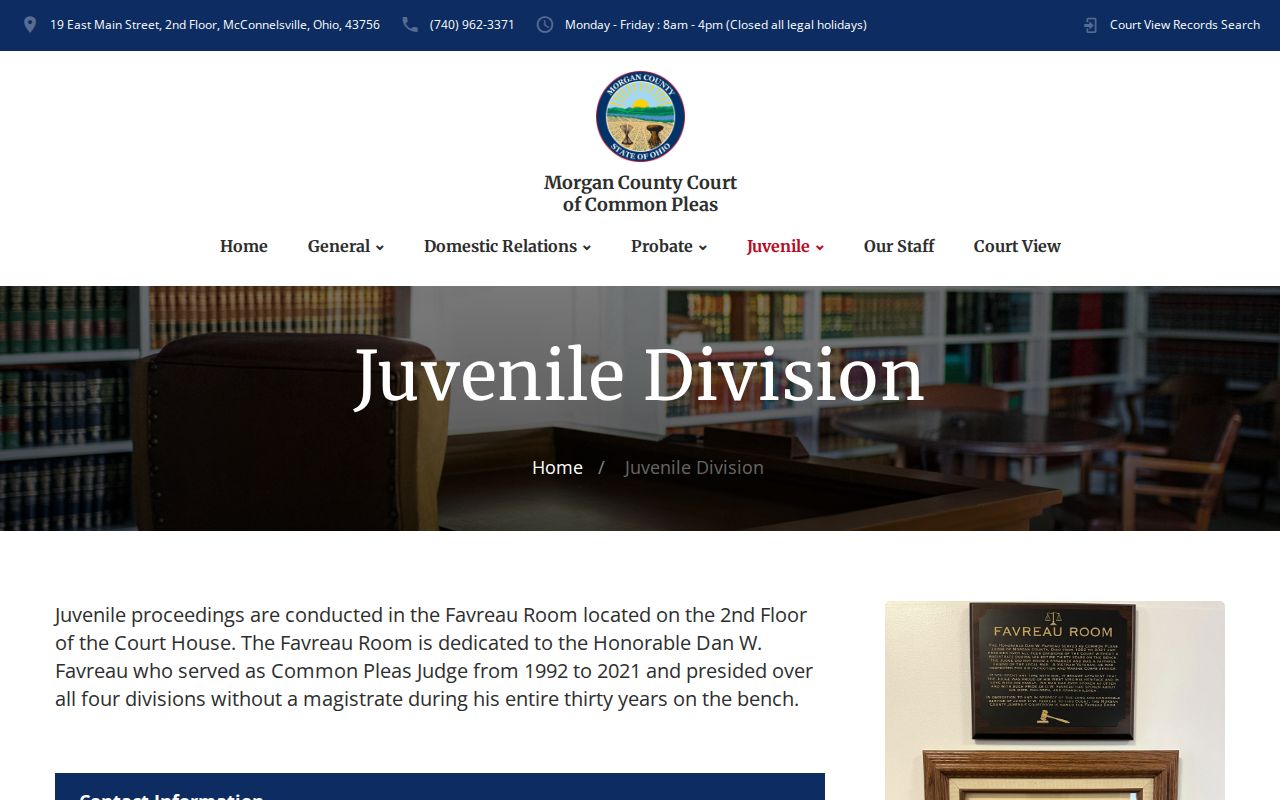
The Morgan County division page helps point a juvenile record question toward the right office. It guarantees nothing about inspecting or copying any particular juvenile case file.
Morgan County Juvenile Filing Deposits
The Morgan County Juvenile Division fee and deposit page lists what a filer must deposit with the court. It is not a general copy-price list for the public. There is no ordinary-copy fee, certified-copy workflow, or public record service deadline on it.
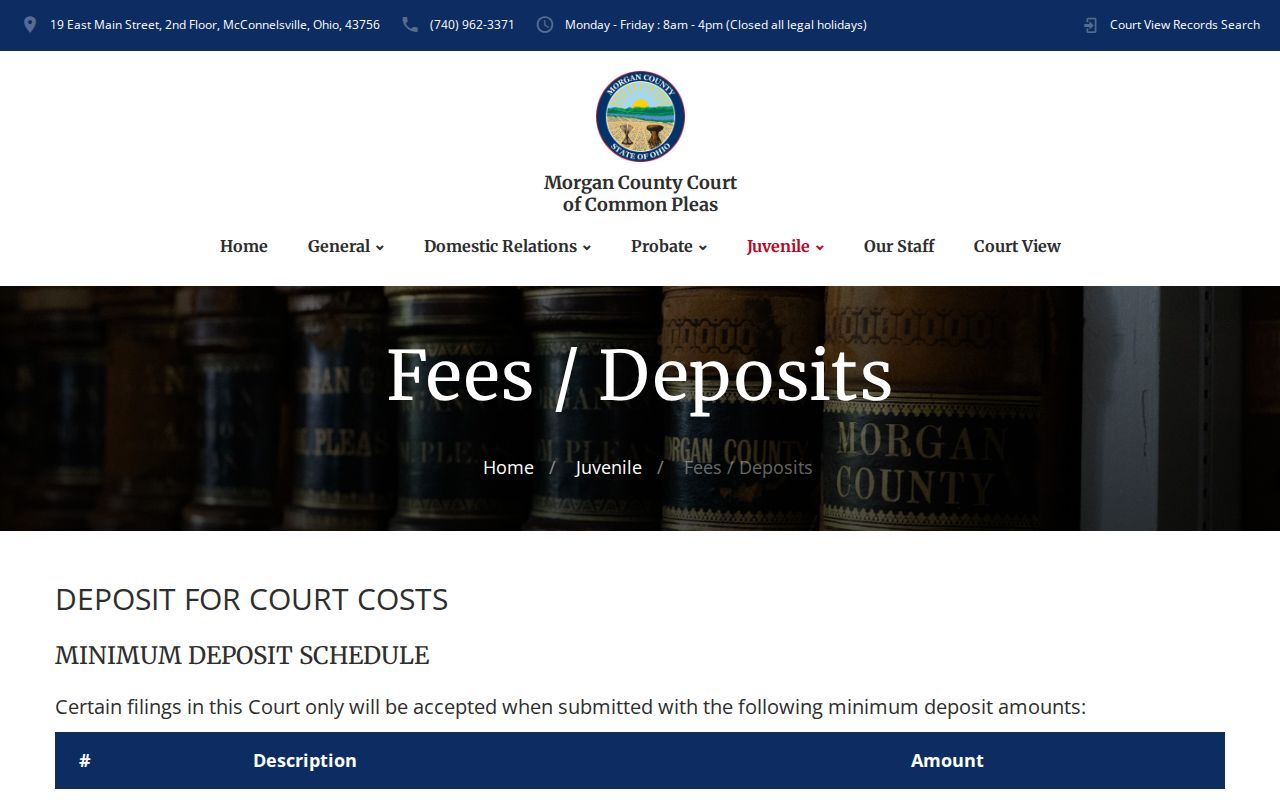
Do not confuse a filing deposit with the cost of a public record request. Confirm the right procedure with the division before you pay either one.
Public Access and Sealed Records
Ohio's Public Records Act, R.C. 149.43, sets one baseline. The judiciary's own access rules add another layer. Starting July 1, 2026, Rules 11.09 through 11.16 of the Rules of Superintendence govern court-record access. They favor public access, with room to maneuver. Redaction is permitted when the situation calls for it. So are limits on direct or remote viewing, generic docket descriptions, initials, and temporary restrictions.
Key Rules:
Ohio R.C. 149.43 requires public offices to make public records available for inspection or copying unless an exception applies.
Ohio Rules of Superintendence 11.09–11.16 govern court-record access and permit tailored protection for sensitive material.
Ohio R.C. 2953.32 provides a sealing or expungement route for eligible conviction and bail-forfeiture records, subject to conditions and exclusions.
Morgan County Court Records Rules
The Ohio Public Records Act source sets the wider state context for open records. Court files still answer to their own access rules, and some cases carry restrictions. So send a public-records request to the clerk that actually holds the Morgan record you need.
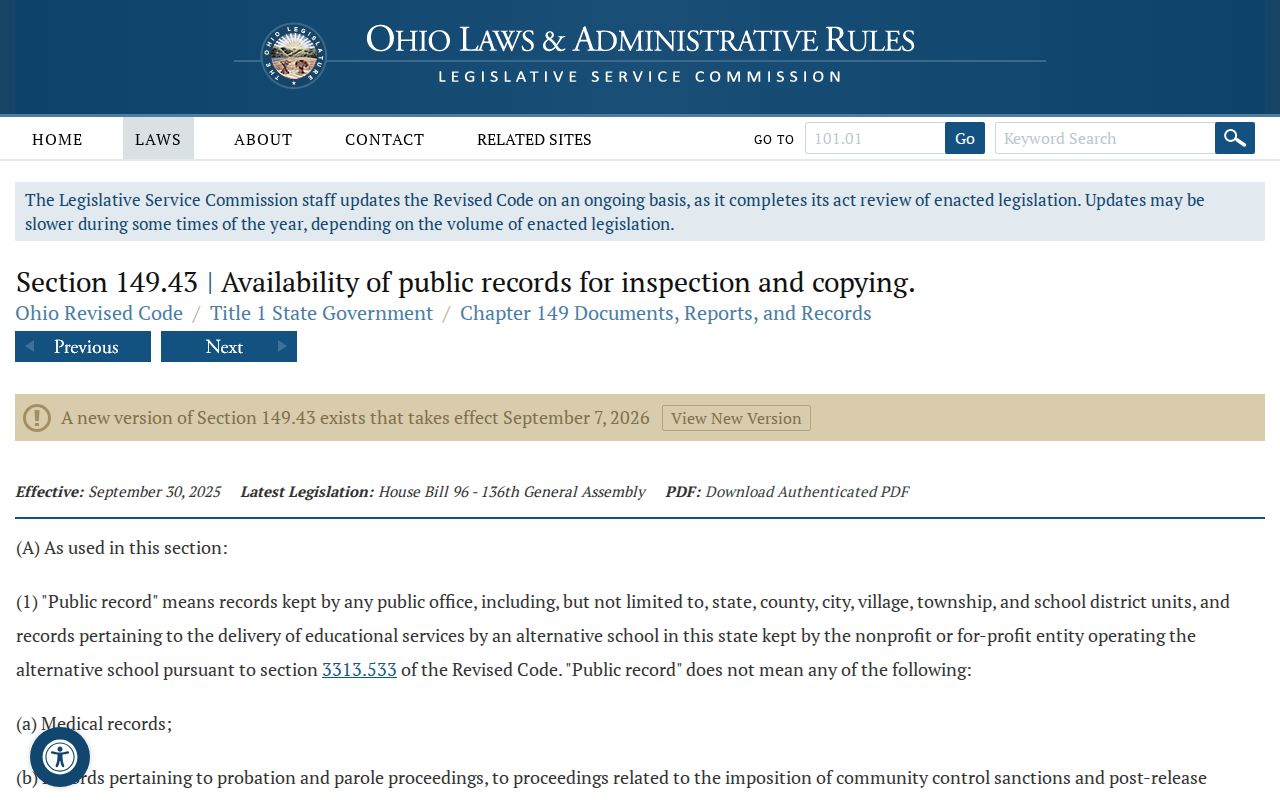
When CourtView comes back empty or shows only part of a file, it never tells you why. A sealed case, an expungement, Juvenile confidentiality, a redaction, or a direct-access restriction could all block the public route. Ask the clerk.
Morgan County Sealed Court Records
Ohio law lets some cases be sealed or expunged. When that happens, the rules permit several different treatments. A case may come off the docket, carry a generic title, or show initials only. Redaction and restricted remote access are also options. There is no single label that every Morgan portal uses for a restricted case. For the full state framework on sealing, see Ohio Revised Code Chapter 2953. It holds the record-sealing provisions and the rules that go with them.
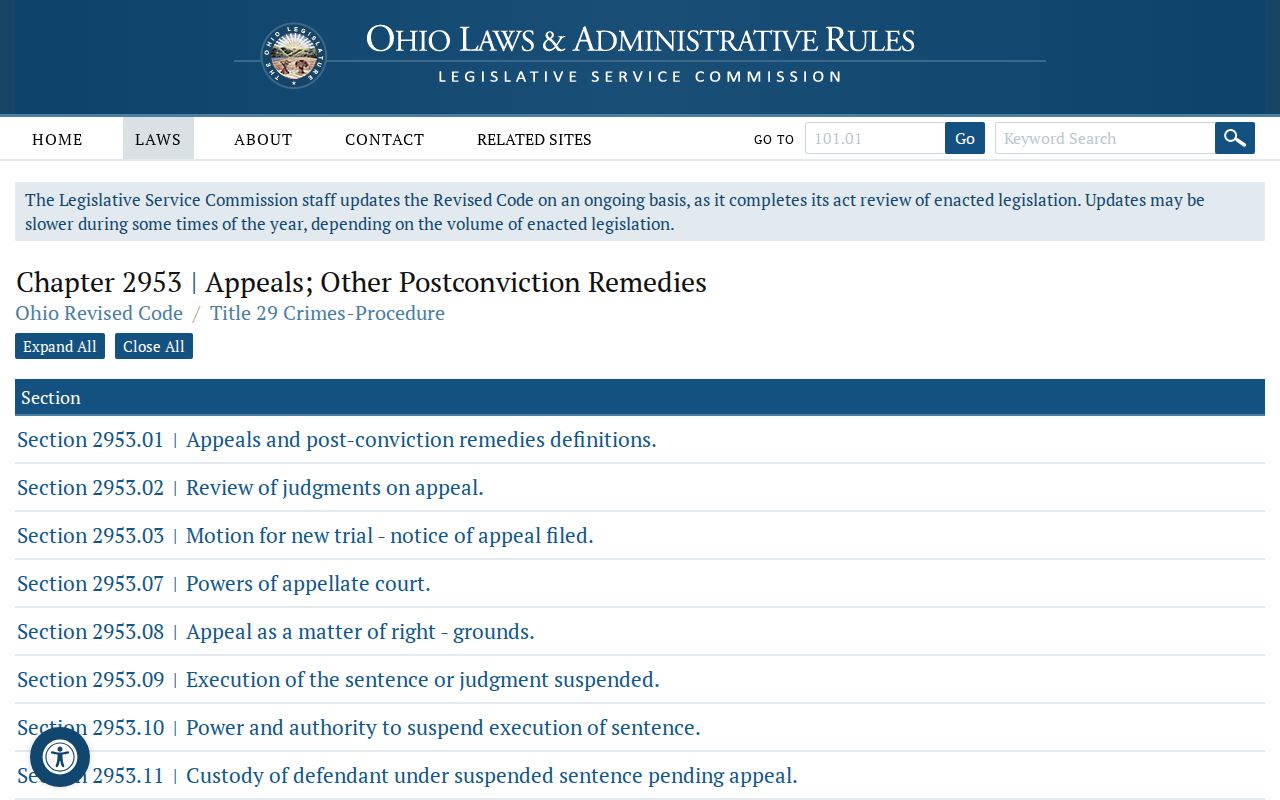
An ordinary search that finds nothing proves very little. The reason a record is off limits could be sealing or something else entirely. The court with custody of the file can explain what public access path exists for that particular record.
Morgan County Federal Record Route
Bankruptcy does not run through the Morgan County clerk. Those federal files live apart from Morgan County court records entirely. The Southern District of Ohio Bankruptcy Court sends case-information requests to PACER and CM/ECF, so a Morgan County docket search or CourtView portal will not carry them. The official court page spells out that electronic route.
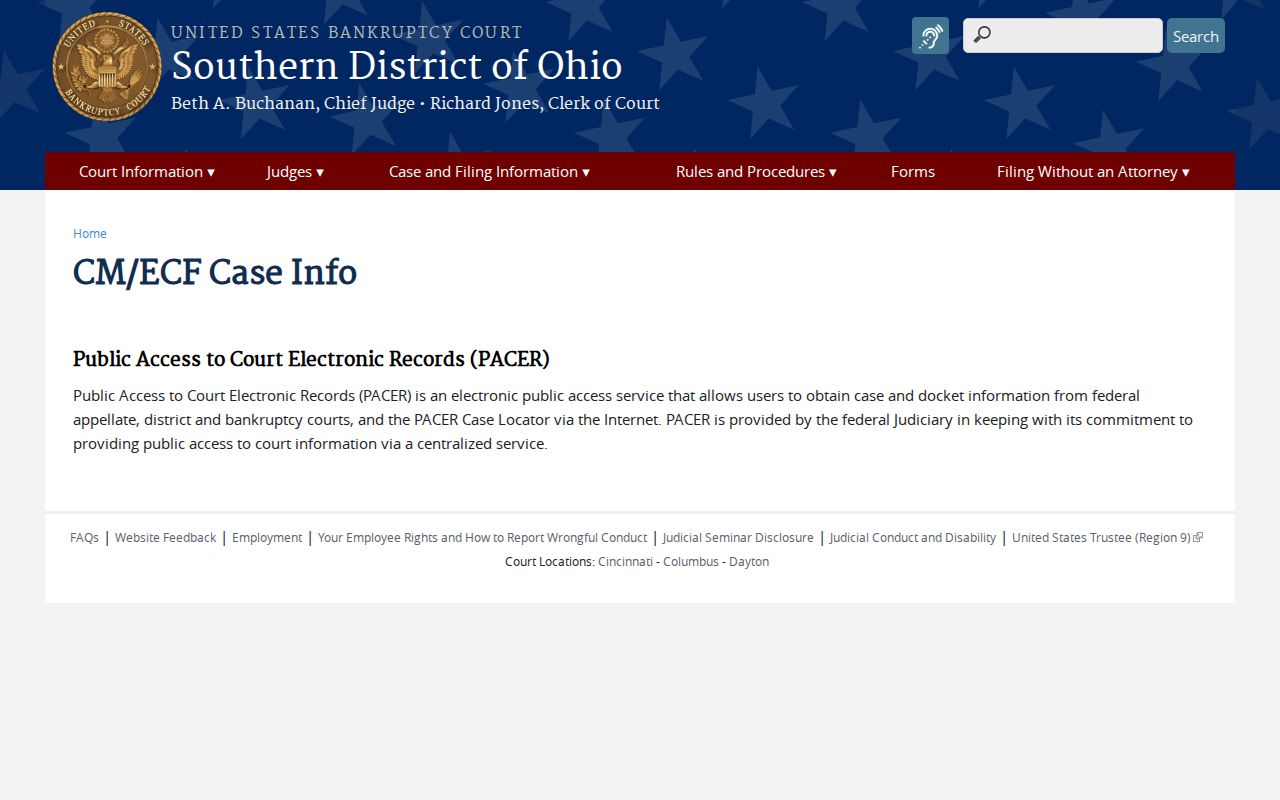
Keeping that federal lane separate prevents mix-ups between a bankruptcy docket and a Common Pleas Probate, civil, or county-court record in Morgan County.